A Small Pot of Calm: Hospital Orchid Gifts That Respect the Ward
A hospital bedside table is not a florist’s usual stage. It is small, shared, often clinical, and governed by rules that have little to do with taste. Yet a potted orchid, chosen and sent with care, can offer a quiet point of calm in a room that otherwise belongs to monitors, paperwork and midday observations. The difference between a welcome gift and an awkward delivery lies in a few practical checks.
First, Ask What the Ward Permits
NHS trusts set their own policies on flowers and plants, and these can vary between hospitals and even between wards on the same site. Intensive care, high-dependency, oncology, transplant and some respiratory wards commonly restrict flowers or potted plants because of infection-control concerns, water hygiene, pollen and scent sensitivities. Some wards permit sealed potted plants but not cut flowers; others permit neither. A few will accept a gift only through reception or a named relative.
Before ordering, check the hospital’s website for a flowers and gifts policy, or telephone the ward. If the patient has a named relative or friend acting as a contact, ask them to confirm. It is better to delay an order by a day than to send a living plant into a ward that cannot receive it. Do not assume that “no flowers” means “no plants”, or the reverse. The distinction matters.
Why a Potted Orchid Often Suits a Ward
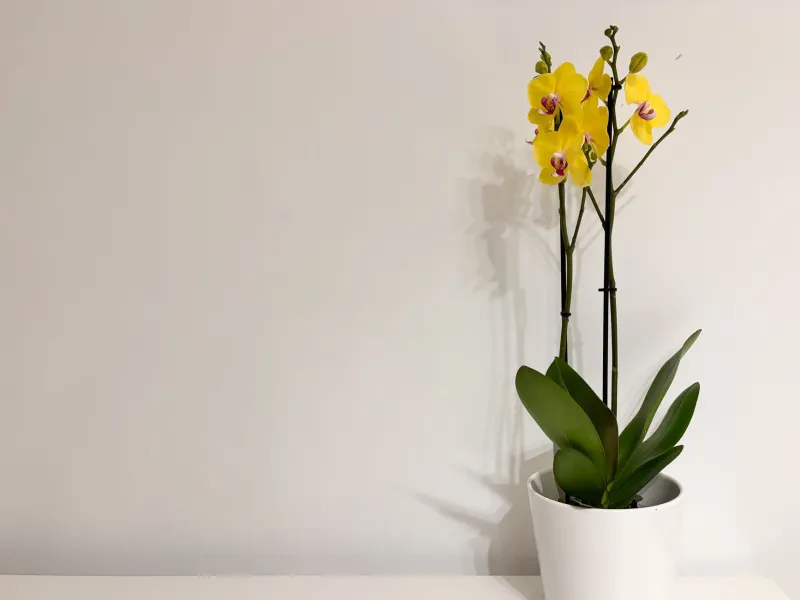
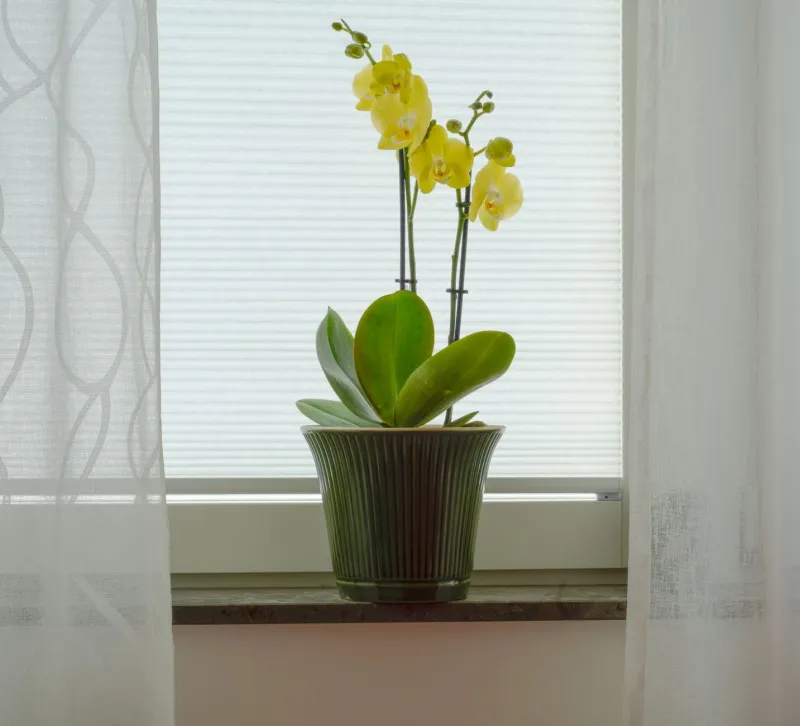
A compact potted orchid has practical advantages over a bouquet. There is no vase of standing water to change, no loose petals to clear, and no heavy scent unless the variety is strongly fragrant. A well-chosen Phalaenopsis can remain in bloom for weeks, offering something steady rather than a brief burst of colour. It also asks little of a patient who may be tired, attached to a drip, or simply not allowed out of bed.
Compact varieties are the sensible choice: a small Phalaenopsis, a Paphiopedilum, or a modest Oncidium with short stems. Avoid tall arrangements that will not fit on a bedside locker, heavy ceramic pots that are difficult to move, and orchids with open reservoirs or saucers that can spill. A sealed pot with moss around the roots is cleaner and easier for ward staff to shift during cleaning. If the plant arrives with a decorative wrap, keep it simple and removable.
Scent, Size and Staying Power
Scent is a courtesy issue as much as a pleasure. Many modern Phalaenopsis are lightly scented or unscented, which makes them suitable for shared wards. Strongly fragrant orchids, lilies, hyacinths and similar flowers are best avoided where other patients may be sensitive. If you are unsure, ask the florist for a low-scent variety rather than guessing from a photograph.
Size matters more than price. A plant around 30 to 40 centimetres in total height, in a 9 to 12 centimetre pot, is likely to sit comfortably on a bedside table without dominating it. Look for firm leaves, green roots and a flower spike with a few unopened buds; buds suggest the display will continue after the first flowers fade. Avoid plants with mould on the compost, yellowing leaves or water sitting in the base. A healthy orchid is a gift; a struggling one becomes a task.
The Card Carries More Weight Than the Bloom
Hospital cards are read in a particular mood. Keep the message short, warm and free of medical detail. “Thinking of you” is often better than “Get well soon”, especially where the stay is long or the prognosis is uncertain. Include your full name clearly, particularly if you are sending on behalf of a group, and avoid questions that require a reply. A line such as “This orchid needs no attention this week” can be reassuring.
Avoid jokes about discharge dates, comments on the food, or references to religion unless you know the recipient’s preferences. If you are sending to a ward where cards are opened by staff or relatives, remember that the message may be read aloud. Write it as you would want it heard.
Coordinating Delivery Without Adding to the Ward’s Day
Hospitals are busy places, and a delivery that arrives at the wrong entrance can become a burden. Address the parcel to the patient’s full name, the hospital, the ward and, if known, the bed number. Include a contact telephone number for the sender or the named relative. Mark the package clearly as a living plant and keep the packaging modest.
Where possible, send to a named relative who can bring the orchid in, or ask the hospital’s reception or postal room about its procedure for patient gifts. Avoid mealtimes, ward rounds and busy visiting changeovers; staff may not be able to accept deliveries then. If the patient is likely to be discharged within a day or two, consider sending the orchid to their home instead. A plant that arrives after the patient has left is a small loss that is easily avoided.
When Flowers Are Not Permitted
If the ward does not allow flowers or plants, respect the rule without trying to find a loophole. A card or letter, a magazine, a small fruit selection that meets any dietary restrictions, or a donation to the hospital charity in the patient’s name can all be thoughtful. You might also arrange for an orchid to be delivered to the patient’s home for their return, with a card explaining that it is waiting. In some cases, a photograph of the orchid with your message is a gentler alternative than sending nothing at all.
A Note on Timing and Aftercare
Unless you know the patient well, wait until the acute phase of the stay has passed. A named relative can usually advise whether a gift will be welcome now or later. Include a simple care card with the orchid: bright, indirect light; water sparingly; do not let the pot stand in water. Ward staff are not responsible for watering plants, and a patient may not be able to do it. Choose an orchid that can tolerate a week of neglect, and label the pot with the patient’s name so that it is not lost if they are moved.
A hospital gift does not need to be large. It needs to be permitted, portable, scent-conscious and easy to live with. Chosen in that spirit, a small pot of calm can do more than a bouquet ever could.