The Scented Orchid Question: Choosing Honestly for British Living Rooms

Photo: Brassavola nodosa fragrant orchid on side table in elegant British living room, via www.mapnations.com
A scented orchid is one of the houseplant world’s most seductive promises. The idea is simple: a flowering plant on a side table, the central heating softly ticking, and a perfume that makes a British living room feel more considered. The reality is more nuanced. Some orchids carry a genuine, memorable fragrance; many others are sold under a broad claim of scent and deliver almost nothing. For the buyer, especially the gift buyer, the useful question is not “Is this orchid fragrant?” but “Is this particular plant likely to be, and under what conditions?”
Why “fragrant” is a looser word than it appears
Orchid fragrance is partly genetic and partly environmental. A species may be reliably scented, while a hybrid raised from it may be only faintly so, or scented only at a particular hour. Mass-market plants are often sold without a cultivar name, which makes the claim harder to verify. A label reading “sweetly scented” may describe a plant that was fragrant in a warm greenhouse at midday, or it may describe a hope rather than a characteristic.
This is not a reason to avoid fragrant orchids. It is a reason to buy with precision. Where possible, smell the actual plant rather than relying on a picture or a generic description. If buying online or by telephone, ask whether the plant is a named species or cultivar, whether it is currently in flower, and how strongly the florist would describe the scent. A careful seller will use measured language — “lightly scented”, “evening fragrance”, “scented when newly opened” — rather than promising that a room will be filled.
Varieties that more often earn their place
No orchid is fragrant on demand, but some have a stronger reputation than others. Brassavola nodosa, sometimes called the lady of the night, is prized for a citrus-like perfume that becomes most noticeable in the evening. It is compact and elegant, though it needs bright light and should not be treated as a low-light plant. Oncidium Sharry Baby is known for a chocolate and vanilla scent; it is vigorous and generous in flower, but in a small room its perfume can be surprisingly assertive. Zygopetalum often carries a spicy, hyacinth-like fragrance and suits a cool, bright position. Miltoniopsis may offer a rose-like scent, but it prefers cooler, more humid conditions than many heated British sitting rooms provide. Some cymbidiums are fragrant, particularly in the morning, though their size and light requirements suit a conservatory or a bright bay more than a dim corner.
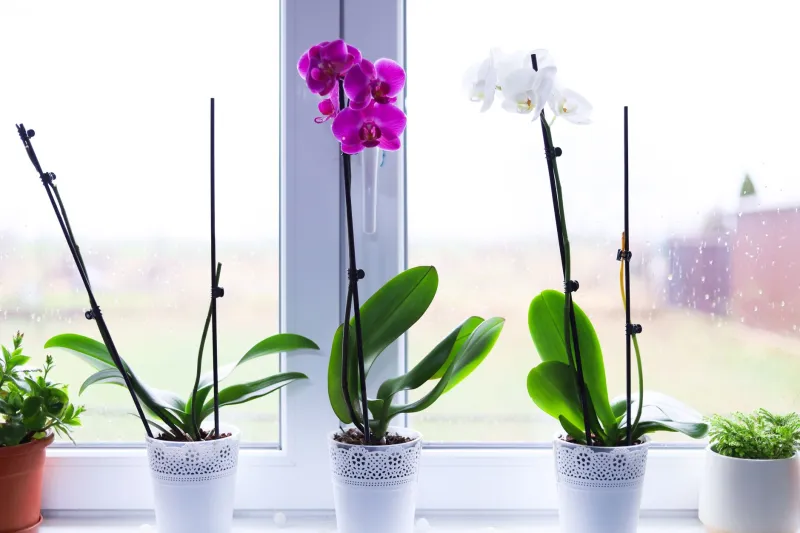
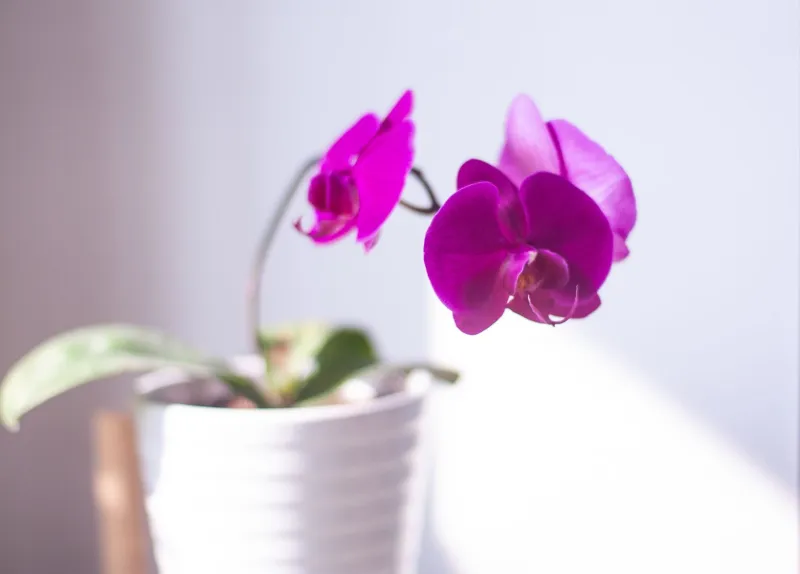
The disappointing side of the market is equally worth recognising. Many standard Phalaenopsis sold in supermarkets and garden centres are unscented, despite the occasional hopeful label. Some are faintly scented, but the average mass-market moth orchid should not be bought with perfume in mind. Similarly, a plant described only as a “fragrant orchid” without a name is difficult to assess. Named species and named clones give the buyer something concrete to ask about.
Placement in a heated British living room
A living room is often the right room for a scented orchid because it is where people sit quietly in the evening. The practical challenge is the heating. Central heating dries the air and creates warm, still pockets near radiators, fires and television equipment. Most orchids prefer bright, indirect light and a position away from direct heat, cold draughts and the drying blast of a radiator. A side table near a window, shaded from the fiercest sun, is usually more suitable than a mantelpiece above a fire.
Scent travels more readily in still, warm air, but warmth should not be confused with hot, dry conditions. A stressed plant may hold its flowers for a shorter time, and no fragrance is worth poor culture. Grouping two or three orchids can concentrate a light perfume, while a single plant in a large open-plan room may be barely noticeable. Keep the plant away from cooking smells and away from the direct path of a doorway, where draughts can shorten flower life. If the room is very dry, a gentle humidifier or a pebble tray may help, but water should not be allowed to sit around the base of the pot or on the flowers.
How scent changes through the day
Orchid fragrance is rarely constant. Many orchids release scent to attract specific pollinators, and that timing is built into the plant. Brassavola nodosa is most noticeable in the evening; some cymbidiums are at their best in the morning; Oncidium Sharry Baby may be strongest in daylight. Temperature, light levels and the age of the flower all play a part. A newly opened bloom may take a day or two to develop its perfume, and older flowers often fade in scent before they fade in appearance.
This matters when choosing a gift. A plant that seems unscented at ten in the morning may be more generous after dusk. A florist who knows the variety can advise on its peak time. At home, the recipient should be encouraged to observe the plant over a full day rather than judging it in the first hour. A small card explaining that the fragrance is likely to be strongest in the evening is more useful than a grand claim that cannot be upheld.
Choosing as a gift without overclaiming
Fragrance is personal. What one recipient finds subtle, another may find overpowering, and some people are sensitive to strong perfume in a closed room. For a living-room gift, honest wording is kinder than sales language. “Scented when in flower” is safer than “highly fragrant”; “evening scent” is more useful than “beautiful perfume”. If the recipient has a small flat, an open-plan kitchen or a dislike of strong smells, a lightly scented orchid or an unscented variety with strong foliage may be the more thoughtful choice.
A named variety, a plant in fresh flower and a brief care note make a coherent gift. The note can mention light, watering and the fact that scent may vary. At Orchid Flower Shop, the aim is to describe fragrance in terms the buyer can rely on, rather than turning a natural characteristic into a guarantee. For UK delivery, especially in winter, it is also worth choosing a florist who packs carefully and can advise on arrival care; a chilled journey can affect flowers, and a plant should be allowed to settle before its scent is judged.
A practical buying checklist
Smell the actual plant where possible, or ask for a measured description. Look for a species or cultivar name rather than a generic “fragrant orchid” label. Check that the flowers are fresh and that buds remain, since scent often develops as blooms open. Ask about light and temperature needs before choosing a position. Avoid buying a standard moth orchid on the assumption that all Phalaenopsis are scented. For a gift, confirm whether the plant is in bloom and include a note about placement away from radiators.
The honest conclusion is that fragrant orchids reward a little scepticism and a little patience. Choose a named variety with a reasonable reputation, place it sensibly in the room, and accept that its perfume will rise and fall with the day. A quietly scented orchid in a British living room is a genuine pleasure; a promise of perfume that never arrives is simply a disappointment.