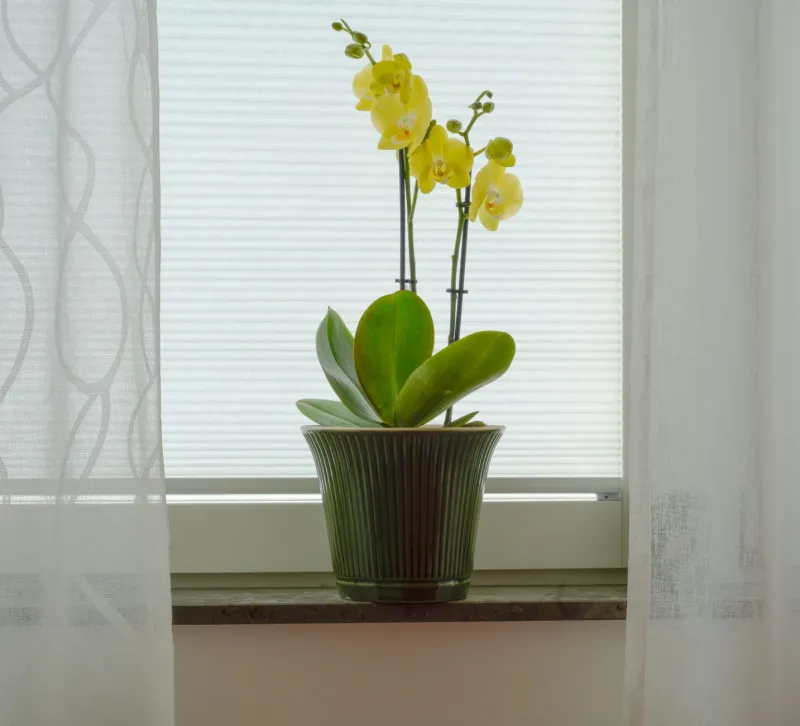
A Windowsill Above the Washing-Up: Orchid Choices for the British Kitchen
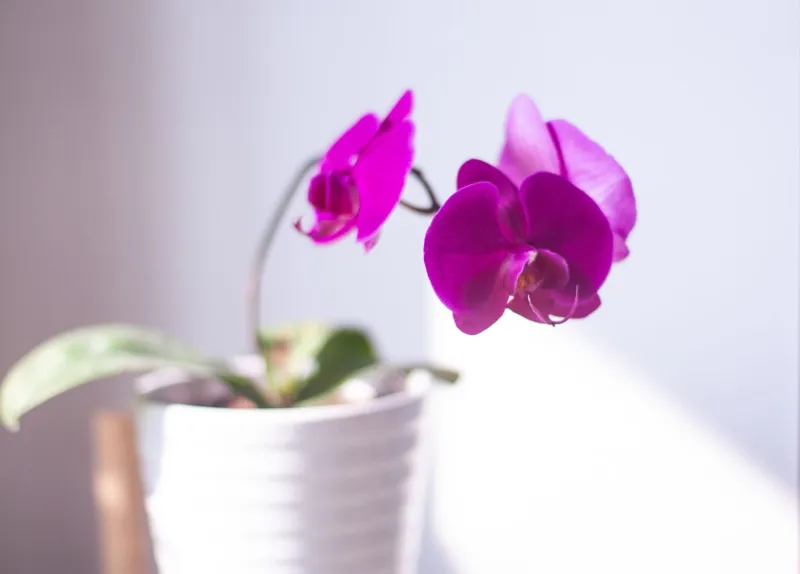
The kitchen windowsill has long been a practical ledge for herbs, a resting place for the washing-up liquid and, in many British homes, the first spot considered when a plant needs a home. It is also one of the least stable environments in the house. A kitchen can be humid while the kettle boils, dry while the extractor fan runs, warm during a Sunday roast and cold after the back door has been opened for the recycling. An orchid placed there is not simply decoration; it is a living plant negotiating a changing room.
The kitchen is not one climate
A kitchen windowsill should be judged across the day rather than at a single moment. Morning light may be soft, but midday sun through double glazing can become surprisingly intense, even in November. Steam from cooking raises local humidity, while an extractor fan or a briefly opened window can remove it within minutes. Heat from an oven, a radiator beneath the sill or a nearby toaster creates warm pockets that dry compost and foliage faster than expected.
For orchids, the aim is not to create a sealed hothouse. It is to avoid extremes. A position that receives bright, filtered light and steady air movement is generally more useful than one that is dark but permanently damp. In British kitchens, the most reliable windowsill is often one that faces east or north-east, where morning light is gentler and afternoon heat is limited. A south-facing sill can work if a sheer blind or a few paces of distance temper the strongest sun.
Orchids that cope with cooking
Phalaenopsis remains the most practical choice for many kitchen sills. It tolerates indoor temperatures well, flowers for a long period and does not demand the high light levels of some showier orchids. Its roots should be allowed to dry slightly between waterings, which suits the faster drying conditions near a warm kitchen. A healthy plant with firm, silver-green roots and clean leaves is a better investment than a heavily discounted specimen with collapsing foliage.
Paphiopedilum, the slipper orchid, is another considered option for a kitchen that is bright but not blazing. It appreciates consistent moisture and moderate humidity, though it dislikes sodden compost. It is less tolerant of strong midday sun than Phalaenopsis and should be placed where the light is soft. For a windowsill that is cool at night but warm by day, a sturdy Paphiopedilum hybrid can be more forgiving than a delicate specimen orchid.
Dendrobium and Oncidium types can succeed in a kitchen with good light, but they are less suitable for a dim sill or one above a constantly used hob. Cymbidiums are best avoided on a narrow kitchen windowsill: they need more space, more light and a cooler winter period than many kitchens provide. The kitchen should not become a holding bay for plants that would be happier elsewhere.
Placement: light, steam and the extractor fan
Placement is a matter of margins. Keep the orchid far enough from the hob that cooking splashes and direct steam do not settle on the flowers, but close enough to benefit from the room's general light. A sill directly beside a boiling kettle is not ideal if the foliage is repeatedly wetted and then cooled. A position a little to one side, with the plant shielded from direct draughts, is usually calmer.
Check the distance from the window glass. In winter, foliage touching cold glass can suffer chilling damage, especially on a frosty morning. In summer, the same glass can magnify heat. A few centimetres of clearance and a light curtain are simple protections. If the kitchen has an extractor fan, run it as normal, but avoid placing the orchid directly in its path. Moving air is helpful; a continuous cold blast is not.
Fruit bowls, fumes and other quiet risks
A kitchen introduces scents and gases that a living room does not. Ripening fruit releases ethylene, which can shorten the life of orchid flowers. A bowl of bananas or apples immediately beside a flowering Phalaenopsis is therefore best avoided. The effect is cumulative rather than dramatic, so distance and ventilation are sensible measures rather than reasons for alarm.
Cooking fumes are another consideration. Persistent smoke, aerosol sprays and strong cleaning vapours can settle on leaves and flowers. The orchid should not be used as a barrier against the frying pan. Wipe leaves gently when dusty, and keep the plant away from direct contact with cleaning products. If the kitchen is regularly filled with steam, allow the room to clear before closing the window, so that condensation does not linger on the flowers overnight.
Watering by observation, not routine
A kitchen orchid should be watered according to its compost and roots, not according to a fixed weekday. Near warmth, the compost may dry faster; in a cool, steamy corner, it may remain damp for longer. Lift the inner pot, feel its weight and look at the visible roots. Silver-green roots and a light pot suggest that watering may be due. Firm green roots and a heavy pot suggest patience.
When watering, take the orchid to the sink, let tepid water run through the compost and allow it to drain fully before returning it to its decorative pot. Never leave the inner pot standing in water. In a kitchen, where the sill may be crowded, it is easy to overlook a hidden reserve. A few minutes of thorough drainage prevent more problems than any amount of misting.
Windowsill styling for gifts
For a housewarming, a kitchen orchid works best when it looks as though it belongs there. Choose a clean-lined ceramic pot in cream, sage or soft grey, and keep the arrangement simple. A Phalaenopsis with a modest bow, a care card and a small pair of snips can feel more considered than a basket crowded with accessories. If the recipient cooks often, place the orchid in a pot that can be wiped clean and choose a position away from the splash zone.
For everyday deliveries, a single orchid in a tactile pot is often enough. Pair it with a plain linen ribbon rather than seasonal novelties, and include a short note about light and watering. A kitchen orchid is a gift of routine as much as beauty: it asks the recipient to glance at the sill, check the roots and make a small adjustment. That quiet attention is part of its charm.
Before any kitchen orchid is delivered or handed over, confirm the intended position. A bright, draught-free sill with filtered light and room to breathe is a promising home. A dark corner beside the microwave is not. The right orchid, placed with a little care, can make the busiest room in the house feel calmer without asking the cook to change their habits.