After the Hallway: A Monday Morning Recovery Plan for a Much-Socialised Orchid

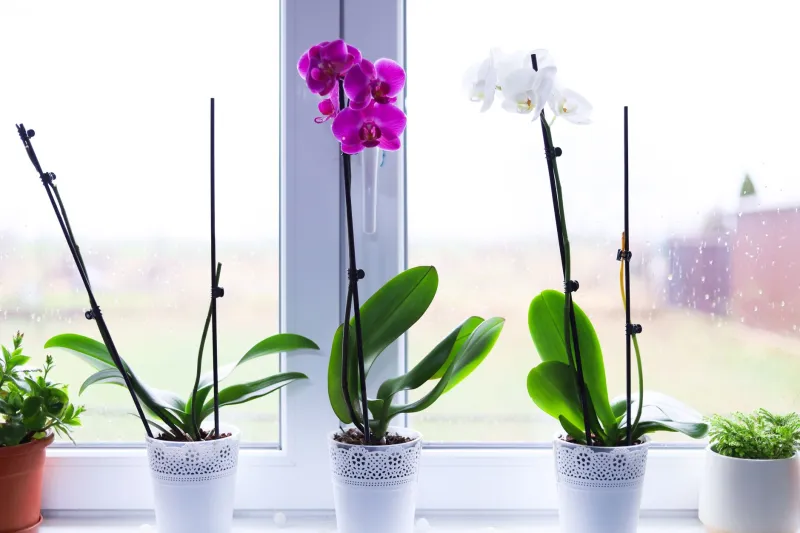
Photo: Mister rf, CC BY-SA 4.0, via Wikimedia Commons
The party was a success. The orchid spent Friday evening on the hall table, Saturday beside a radiator because the table was needed for coats, and Sunday on the kitchen windowsill while the glasses were washed. By Monday morning it looks tired, and someone in the household is wondering whether it can be saved.
Usually it can. What follows is the order of operations we would use in the shop, adapted for a kitchen table.
First, do nothing for an hour
Resist the urge to water it immediately. A plant that has been in a warm, crowded hallway has often been watered twice by well-meaning guests, and adding more is the single most common way to turn a recoverable orchid into a lost one.
Move it to a cool, bright room away from direct sun, radiators and draughts. Set it down. Leave it alone for an hour so that the leaves and compost reach room temperature and you can judge it accurately rather than reacting to the state it was in when it came out of the hallway.
The weight test comes before the watering can
Lift the pot. A well-watered orchid in bark is unexpectedly heavy. A dry one is light enough to be a surprise.
If it is heavy, do not water. If it is light, check the compost an inch below the surface before deciding. Water only if that layer is dry, and then water properly: tepid water through the compost until it runs out of the base, left to drain for ten minutes, never standing in a saucer.
Never use water straight from the cold tap in December. Cold water on warm roots is a shock, and it is easily avoided by leaving a jug to stand for half an hour.
Reading the leaves
Leaves are honest, if you know what they are saying.
- Limp and leathery, with a silvery cast. Probably dry, likely from two days near a radiator. Water as above and give it a week.
- Yellowing from the base, soft to the touch. More likely overwatered, particularly if a guest emptied a glass into the pot. Stop watering entirely and let it dry.
- Crisp brown edges on the newest leaves. Heat or dry air, occasionally hard water. Move it and accept the marking; the leaf will not repair itself but the plant will continue.
- Dark, water-soaked patches. Cold damage from a doorstep, or scorch from a south-facing sill. Keep it cool and dry and watch for spread.
- Sticky residue on the leaves or the table beneath. A pest, most likely scale or mealybug, which often arrives with a plant that has been in company. Wipe with a damp cloth and isolate.
Buds and flowers: what actually happened
The most visible damage after a weekend is bud drop, and it is rarely the owner's fault in any obvious way. Buds abort when they are exposed to ethylene, sudden heat, cold draughts or the dry air of a room with the heating on hard. A hallway full of coats, cigarette smoke drifting in from the step and a scented candle on the sill will do it.
Cut spent flowers back to the next node with clean scissors. Leave a green flower spike in place if it is still firm; it may produce a secondary spray. Do not mist the flowers, and do not move the plant again while it is in bloom. Orchid flowers have a limited tolerance for change and will drop rather than adapt.
Quarantine, quietly
Keep the plant away from your other houseplants for a fortnight. Two days in a crowded hallway is an efficient way to pick up scale, mealybug or thrips from a coat sleeve or another guest's gift. Check the undersides of leaves and the joints where the leaf meets the stem, once a week, for a month.
This is not alarmism. It is simply cheaper than treating an infestation across a windowsill in January.
What the hallway actually did to it
Three things, usually at once. Dry warmth pulled moisture from the leaves faster than the roots could replace it. Coats and bags knocked the stem, bruising tissue that will darken over the following week. And the air itself, thick with cooking, candles and smoke, delivered enough ethylene to persuade the buds that the season was over.
None of this is catastrophic in itself. Together, it explains why a plant that looked well on Friday looks defeated on Monday.
When to accept that it needs assessment, not rescue
The rule we use is simple: if the plant is not improving after a fortnight of sensible treatment, bring it in.
Bring it in sooner if the crown, the point at which the leaves meet, is black and soft. That is rot, and it moves fast. Bring it in if the roots visible through the pot are brown and hollow rather than firm and green. Bring it in if a brown lesion is spreading across a leaf, or if the whole plant has lost its firmness despite correct watering.
A florist can do what a kitchen table cannot: unpick the root ball, assess what is alive, repot into fresh bark, and tell you honestly whether the plant is worth the trouble. Sometimes it is not, and it is kinder to say so.
The fortnight after
No feeding. No repotting while in flower. No moving between rooms to find a better spot. Give the plant two quiet weeks in one place, water it when the weight test says so, and let it settle. Orchids respond to consistency far more than to intervention, and the temptation to fuss is the greater risk.
A note for next December
If the orchid is going to be in the hallway again, move it there on the morning of the party rather than the night before, and move it out again before the coats arrive. Choose a spot away from the radiator and the front door. And if the hallway is the only space available, consider a bowl of cut flowers for the evening and leave the orchid where it is. It will thank you in January.