Handover at the Doorstep: A Christmas Orchid Briefing for the Neighbour Who Will Water
Christmas travel has a way of turning a modest houseplant into a matter of household logistics. An orchid is not demanding, but it is particular. Before keys change hands and the neighbour kindly agrees to look in, it is worth preparing a short, clear briefing that protects both the plant and the goodwill involved.
Begin with a realistic assessment
The first question is not who will water the orchids, but whether they need watering at all. Many established orchids in a British home will manage a week to ten days without intervention, provided they are healthy, correctly positioned and not newly potted. A longer absence, a newly purchased orchid or a plant in bud calls for a sitter.
Be equally realistic about the sitter's role. A neighbour is not a horticulturalist, and should not be asked to diagnose, repot, feed or rearrange. The brief should be small enough to follow at a glance and precise enough to prevent guesswork.
Prepare the brief before the suitcase appears
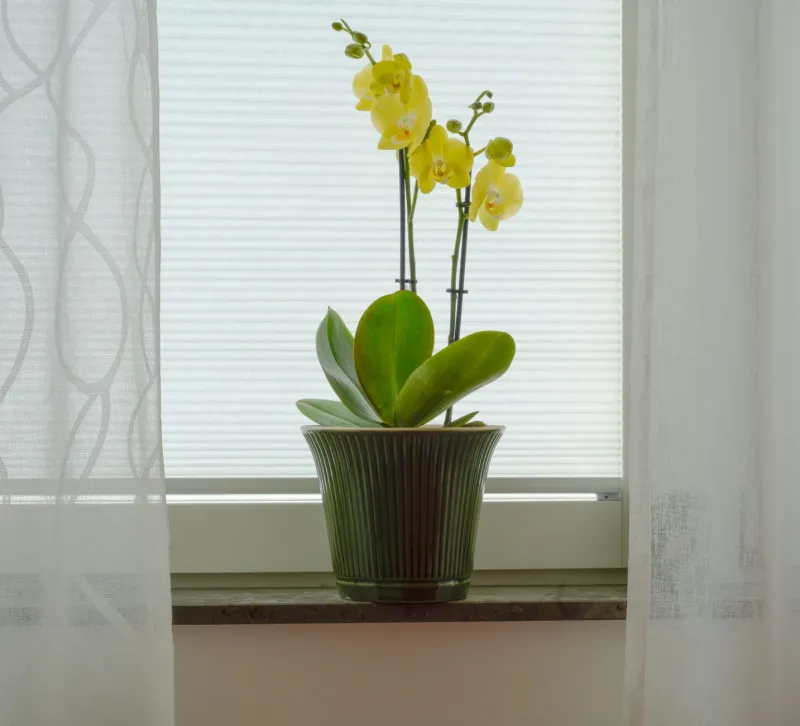
Write instructions plant by plant rather than as a general note. Two orchids in the same room may have different watering rhythms, especially if one sits in bark and another in moss. Label each pot discreetly with a small marker or paper tag, using a name the sitter will recognise: 'sitting room moth orchid', 'kitchen windowsill orchid', 'spare room dendrobium'.
Leave the watering can where it can be found, and decide in advance whether the sitter should use the kitchen tap, filtered water or rainwater. In most British homes, tepid tap water is acceptable for a short handover period, but the instruction must be clear. Cold water straight from the tap is not kind to tropical roots.
What the sitter actually needs to know
Water
State the day or days for checking, not a fixed volume. The sitter should look at the potting medium and the weight of the pot before watering. For a moth orchid in bark, water thoroughly at the sink, allow it to drain completely, and return it to its decorative pot only when no water remains in the base. Never leave an orchid standing in water.
Light
Ask the sitter not to move the orchid. A plant that has settled into a good position will not benefit from a sudden move to a brighter windowsill, particularly in December when daylight is brief and direct sun can be harsh. If curtains are usually closed during the day, ask that they remain open enough for the plant's existing light to continue.
Temperature and air
British homes vary enormously in winter. Ask the sitter to keep the orchid away from radiators, open fires, draughts and cold windows at night. A steady room temperature is preferable to a warm burst followed by a chilly spare room. If the heating is set to come on at different times, mention it.
Position
Add a clear 'do not move' note. Orchids dislike being shifted from a stable spot, and a well-meaning sitter may decide the kitchen windowsill looks more cheerful. It may be, but it is not necessarily better for the plant.
Feeding and flowers
Feeding should usually be paused for a short absence. Ask the sitter not to mist the flowers, not to remove buds and not to tidy leaves unless a leaf is clearly yellow and loose. Fruit bowls should be kept away from flowering orchids, as ripening fruit can shorten flower life.
The printable handover checklist
- Sitter's name, phone number and the dates you are away
- Spare key and alarm instructions, if applicable
- Plant-by-plant labels: room, orchid type, pot type
- Watering day and preferred water source
- Clear note: water at the sink, drain fully, never leave standing water
- Instruction: do not move the orchid from its position
- Instruction: no misting, no feeding, no repotting
- Room temperature note and radiators or draughts to avoid
- Location of a towel or mat for draining pots
- Emergency contact and a note of what to do if a flower drops
- A polite reminder that less is generally better than more
Print two copies if possible: one for the sitter and one for the kitchen noticeboard. The checklist should be practical rather than decorative; clarity matters more than calligraphy.
Mistakes to prevent politely
The most common error is overwatering. A sitter who sees an orchid once every few days may water on each visit, believing that care means attention. In fact, many orchids prefer to dry slightly between waterings. The second common error is moving the plant to a brighter or warmer spot. The third is misting the flowers, which can leave marks and encourage problems. Feeding, repotting and trimming are also tasks for the owner, not the sitter.
A less obvious mistake is watering on a schedule without checking the pot. A cool spare room may dry slowly; a warm sitting room may dry faster. The sitter should be invited to check first and water only if needed. Another risk is the decorative outer pot: water drained into it can sit unseen around the roots. Ask that the orchid be watered at the sink and returned dry.
Which orchids are safest to leave in a British home
The most forgiving are usually mature moth orchids, Phalaenopsis, established in bark and already settled in a stable position. Established dendrobiums with pseudobulbs also tolerate a short absence reasonably well. A cymbidium in a cool, bright room can be left for a week or so if it is not in bud and the room does not become excessively warm.
Less suitable for unattended leave are newly repotted orchids, jewel orchids, Miltonia and any orchid in bud or newly delivered. These react to change, and a short absence is not the moment to test their resilience. If an orchid is in flower, the aim is simply to keep conditions steady until your return.
On your return
Check the potting medium, the roots visible at the surface and the leaves before watering again. A flower or bud may have dropped, but that is not necessarily a crisis. Thank the sitter, inspect the plant calmly and restore its usual routine. A good handover is not a test of the neighbour's skill; it is a small, sensible plan that keeps the orchid comfortable until you are home again.