Full Baskets, Living Plants: A Calm Approach to the 2026 Black Friday Orchid Offers
The final week of November has become, for better or worse, a fixture of the British retail calendar. Black Friday lands on Friday 27 November 2026, with Cyber Monday following on 30 November, and the offers will not confine themselves neatly to those two days. Orchids will appear in the promotions alongside televisions and trainers, which is where the difficulty begins. A discounted orchid is not a discounted object. It is a living plant in a particular stage of growth, wrapped and posted in a particular week of the year, and the arithmetic of a good deal looks rather different from the arithmetic of a cheap one.
Why a Living Product Sits Awkwardly in a Discount Calendar
Promotional retail rewards volume. Warehouses fill, dispatch benches run late, and couriers take on seasonal staff. None of this is sinister, but all of it matters when the item in the box is a flowering plant that would prefer to be somewhere steady, at a moderate temperature, with its roots undisturbed.
Orchids tolerate a great deal. They also register neglect in ways that are not immediately visible: a bud that holds on the bench may drop three days after arrival, and roots that were sound at packing can suffer in a cold van. A discount is therefore only real if the plant arrives in the condition the seller described. Everything below is an attempt to establish whether it will.
Reading the Plant Rather Than the Badge
A percentage on a label tells you what the seller has taken off. It does not tell you what you are buying. Four details are worth more than any headline reduction.
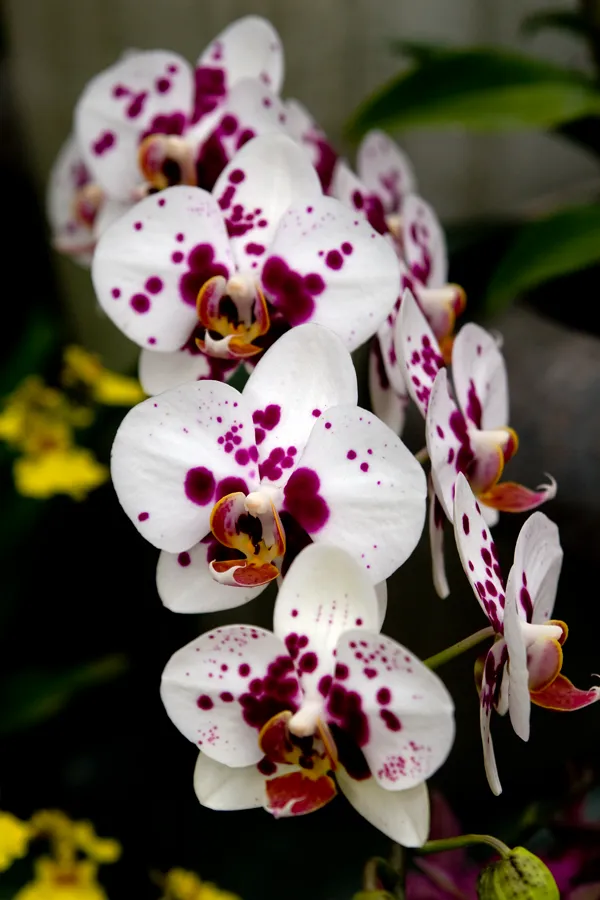
The bud-to-bloom ratio. A plant photographed with every flower open has already spent much of its display life. Several tight buds alongside two or three open flowers usually means weeks rather than days ahead. Ask what stage the plant is in at dispatch, not at photography.
Stem count and structure. A second spike is not decoration; it is a substantial share of the plant's energy and of its eventual display. Single-spike plants can be excellent value, but they should be priced as single-spike plants.
Pot size and medium. A 12cm pot with visible roots through the inner sleeve is a different proposition from a 9cm pot topped with moss to hide the surface. Moss is not dishonesty, but it conceals the growing medium and the root condition beneath it.
Leaf quality. Firm, mid-green leaves that sit well on the plant are reassuring. Limp, wrinkled or yellowing foliage suggests a plant that has been through something, whether cold, drought or a long spell in transit.
The Questions Worth Asking Before You Pay
A reputable seller will answer these without irritation, in writing, on the product page or by message:
- When will the plant be dispatched, and is that a monitored promise or an aspiration?
- Which courier and which service level, tracked next-day or a two-day service?
- How is the plant protected against cold, and is thermal packaging included in the price?
- If the exact variety sells out, what is the substitution policy?
- Is delivery on a chosen date guaranteed, or is the date shown an estimate?
Where those answers are absent, the discount is doing the work that information should be doing.
Cold-Weather Dispatch Is the Detail That Separates Deals
Late November in the UK can deliver twelve degrees and drizzle or a hard frost within the same week. Orchids are not hardy, and the weakest points in any delivery are the unheated hours: the back of a van, the sorting depot, the doorstep.
Three practical points follow. First, thermal packing is not a gimmick in December, and a seller who offers it as standard during cold snaps is signalling how they think. Second, dispatch days matter. A parcel handed to a courier on Thursday or Friday may sit in a depot over a weekend; Monday and Tuesday dispatch is generally kinder. Third, a nominated safe place or a neighbour is a sensible instruction in July and a risky one in a cold snap. If nobody will be home, choose a delivery date when somebody will.
The Calendar Trap: Gift Date Versus Arrival Date
Black Friday falls a month before Christmas, which makes it tempting to buy a Christmas orchid at the end of November. The plant, however, will be living in a home for four weeks before it is given. Whether it is watered, whether it sits above a radiator, and whether it is repotted by an enthusiastic recipient are all beyond the seller's control by then.
If the orchid is intended as a gift, it is usually better to buy in the offer window and request delivery in the week of the occasion, or to buy on Cyber Monday with a mid-December date agreed. A plant that travels once, close to the day it is given, is more likely to be the plant you chose.
Doing the Arithmetic on a False Economy
Consider a discounted orchid at £18. It arrives on a two-day service without thermal packing, with one spike and most flowers open. It drops two buds in the first week and loses its remaining flowers by mid-December. The recipient buys a replacement for £30, plus delivery, in the week before Christmas. The real cost of the first purchase was not £18; it was £18 plus the replacement plus the awkwardness of a gift that faded early.
Set against that a two-spike plant at £34 with tracked next-day delivery and insulated packaging. The difference of £16 buys a shorter journey, a longer display and a reasonable expectation that the plant will still be in flower when it is unwrapped. On any sensible accounting, that is the cheaper orchid.
Presentation, Which Discounts Rarely Cover
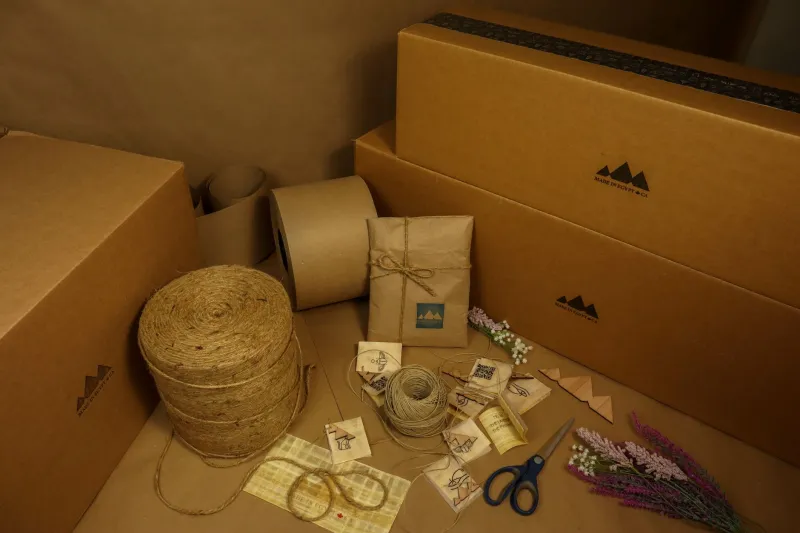
If the orchid is a gift, the wrapping, the card and the care note are part of the product. Check whether the pot shown is included, whether a handwritten message is offered, and whether a printed care card accompanies the plant. These are small things that a deep discount frequently removes, and their absence is felt at the moment of giving rather than at the moment of purchase.
A Short Checklist for the Week
- Confirm the dispatch day and the courier service in writing.
- Establish the bud-to-bloom ratio at dispatch, not in the photograph.
- Ask about thermal packaging and cold-weather protection.
- Compare pot size and stem count, not just the percentage saved.
- Read the substitution policy before ordering a named variety.
- Match the delivery date to the occasion rather than to the offer.
- Choose a day when someone will be in to receive the parcel.
- Keep the order confirmation, including the delivery date promised.
When the Parcel Arrives
Unpack promptly and check the roots through the inner pot. Do not water a plant whose medium is already damp, do not repot it while it is in flower, and keep it out of draughts and away from radiators for the first few days. A settling period of a week in good light will tell you more about the plant's condition than any photograph could.
A well-run offer, sensibly used, is a good way to buy a generous plant at a fair price. The discipline lies in treating the calendar as a distraction and the plant itself as the thing being assessed. Bought on those terms, an orchid in the Black Friday window can be exactly what it should be: a fine plant, modestly priced, arriving in the condition it was promised.