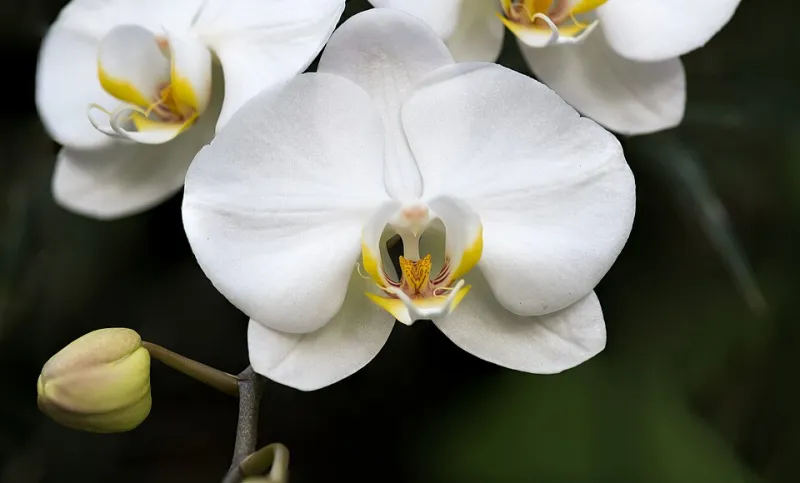
From Dispatch Bench to Doorstep: How a Winter Orchid Survives a British December
By the second week of November, the dispatch bench at a UK florist takes on a different character. Orders that in June could be packed in a light carton are now wrapped, sleeved, insulated, and, in the coldest weeks, accompanied by a heat pack timed to a courier route that nobody at the bench will ever see. The plant itself has not changed; the journey has. What follows is an attempt to describe that journey plainly, and to explain why a few small actions on the doorstep matter more than most care labels admit.
What Leaves the Bench
A phalaenopsis prepared for a December delivery is not simply placed in a box. The flower spike is supported and, where necessary, gently sleeved so that buds are not knocked in transit. The pot is secured so that it cannot slide, and the compost surface is often dressed with moss, which serves both a decorative and a practical purpose by holding a little humidity around the roots.
The carton itself is lined. In mild weather a paper liner is sufficient; below roughly five degrees, an insulated liner and a heat pack are added. The pack is activated shortly before collection and is deliberately not oversized. Too much warmth in a sealed box creates condensation, and condensation on developing buds is a more common cause of Christmas disappointment than cold alone. Vents are left clear, the box is marked for orientation, and the whole assembly is weighed and labelled.
Two things are worth noting here. First, orchids travel best upright, which is why the orientation markings matter and why a box that has clearly been on its side is a reasonable cause for inspection on arrival. Second, the plant leaves the bench in good condition; almost everything that happens afterwards is a matter of temperature and handling.
Cold Is Not a Single Condition
Phalaenopsis are tropical epiphytes, and they are uncomfortable below about twelve degrees. Prolonged exposure to temperatures under ten degrees produces what growers call chilling injury: water-soaked patches on the leaves, dark edges, and, most frustratingly, bud drop, where perfectly formed buds yellow and fall within days of arrival. The plant may look reasonably well on the doorstep and decline over the following week, which is why the recipient's first impressions are not always a reliable guide.
Cymbidiums and paphiopedilums are more tolerant of cool conditions, and a cymbidium in a cool hallway is generally content. This distinction matters when choosing a gift for a recipient whose home is hard to heat, or for delivery to a porch, a garage, or an office that closes over the holiday period.
Inside the Courier Network
Between the bench and the doorstep, a parcel will pass through a collection van, a local depot, possibly a national hub, a delivery van, and a round. Vans are frequently unheated in the rear, and a depot floor can be cold overnight. This is not misconduct; it is simply the physics of moving several million parcels in a fortnight.
What mitigates it is planning rather than heroics. Dispatch early in the week, so that a parcel is not left in a depot over a weekend. Avoid the final pre-Christmas days, when volumes rise and dwell times lengthen. Where the option exists, choose a service with a shorter network path, even at additional cost. It is also worth stating plainly that a tracked delivery photograph of a box on a wet doorstep is not proof of safe delivery in freezing conditions.
The Final Ten Metres
The most vulnerable part of the journey is the shortest. A parcel left in an unheated porch at eight in the morning and collected at seven in the evening has spent eleven hours in ambient December air. A plant left in a wheelie bin store, behind a gate, or with a neighbour who then goes out is at similar risk.
A sensible instruction in the checkout notes goes a long way: name a specific safe place that is sheltered and not unheated, or nominate a neighbour who is likely to be in. Where a recipient knows they will be out, redirecting the delivery to a staffed collection point is usually preferable to an exposed doorstep, provided the point is indoors.
The First Twenty-Four Hours
When the box is opened, resist the urge to do everything at once. The following sequence is the one we recommend.
- Bring it in and unpack promptly. Remove outer packaging and any plastic sleeve, which traps moisture and ethylene around the flowers.
- Let it settle. Place the plant in a room at normal household temperature for an hour or two before deciding where it will live. Avoid moving it straight to a hot room or a cold windowsill.
- Inspect the foliage and buds. Healthy leaves are firm and evenly coloured. Pale, translucent, or blackened patches suggest cold exposure; yellowing buds that fall at a touch indicate the same.
- Do not water immediately. Compost in transit is usually adequately moist. Waterlogging a chilled plant is a reliable way to lose roots.
- Choose the position carefully. Bright, indirect light, away from radiators, fires, draughts, and ripening fruit. A north or east-facing windowsill is often better than a sunny south-facing one in winter.
- Leave it alone. Orchids dislike fuss. Once positioned, allow a week before adjusting anything.
A plant that has been briefly chilled may still recover; a plant that has been chilled and then overwatered rarely does. If buds drop within the first few days, keep the plant, maintain modest care, and allow the existing flowers to open. Phalaenopsis frequently produce a secondary spike from the same stem.
When to Contact the Shop
The industry norm is straightforward: report a problem within twenty-four to forty-eight hours of delivery, with a photograph of the plant, the packing, and the box. Reputable florists replace plants that have suffered in transit, and a clear photograph taken on the day of arrival makes that conversation simple for everyone. Waiting a fortnight to report a problem makes it very difficult to establish what happened.
Winter delivery is not a risk to be eliminated but a set of conditions to be managed. A plant packed with care, dispatched on a sensible date, and received by someone who knows to unwrap it and keep it away from the radiator will usually reward the effort with months of bloom. The tinsel, after all, is temporary. The orchid need not be.